

PCL Reconstruction Surgery
PCL Reconstruction Surgery Starting from 45,000/-Rs.
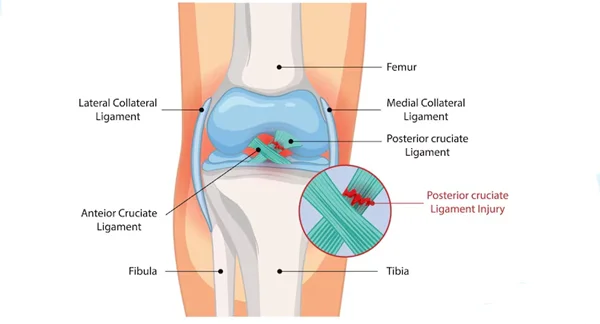
PCL (Posterior Cruciate Ligament) reconstruction surgery is an orthopedic procedure used to repair a torn posterior cruciate ligament in the knee. The PCL is one of the key ligaments that stabilizes the knee joint by preventing the shin bone (tibia) from moving too far backward relative to the thigh bone (femur). Although PCL injuries are less common than ACL injuries, they can still cause significant knee instability, pain, and difficulty in movement if left untreated.
At BeatX Healthcare, our orthopedic and sports injury specialists provide advanced minimally invasive PCL reconstruction procedures using arthroscopic techniques to restore knee stability, reduce pain, and help patients return to an active lifestyle.
What Is the PCL?
The Posterior Cruciate Ligament is a strong band of tissue located inside the knee joint. It connects the femur to the tibia and works along with the ACL to control knee movement.
Functions of the PCL:
- Prevents backward movement of the tibia
- Supports knee stability during walking and running
- Helps control knee rotation
- Works with other ligaments for joint balance
When the PCL is torn, knee stability is compromised, leading to pain and functional limitations.
What Is PCL Reconstruction Surgery?
PCL reconstruction is a surgical procedure in which the damaged ligament is replaced with a graft (new tendon tissue). Since a torn PCL does not heal well on its own in severe cases, reconstruction helps restore normal knee biomechanics.
The procedure is usually performed arthroscopically (minimally invasive), using small incisions and a camera-guided system.
Goals of PCL Reconstruction:
- Restore knee stability
- Improve joint function
- Reduce pain and swelling
- Prevent long-term joint damage
- Enable return to daily and sports activities
Causes of PCL Injuries
PCL injuries are usually caused by high-impact trauma, such as:
- Road traffic accidents (dashboard injury)
- Sports injuries (football, wrestling, rugby)
- Direct blow to the front of the knee
- Fall on a bent knee
- Hyperextension injuries
- Work-related accidents
Because of the force required, PCL injuries often occur along with other ligament or cartilage damage.
Symptoms of PCL Tear
Patients with PCL injury may experience:
- Knee pain (especially at the back of the knee)
- Swelling and stiffness
- Difficulty walking
- Feeling of instability
- Reduced athletic performance
- Pain while going downstairs or downhill
- Knee weakness
- A feeling that the knee is “giving way”
Symptoms may be mild initially, which is why some PCL injuries go undiagnosed early.
When Is PCL Reconstruction Required?
Not all PCL injuries require surgery. Mild cases can be managed with physiotherapy and bracing. However, surgery is recommended when:
- There is a complete PCL tear
- Knee instability persists despite treatment
- Multiple ligaments are injured
- Associated meniscus or cartilage damage exists
- Patient has high physical activity needs
- Chronic pain and instability affect daily life
- Non-surgical treatment fails
Diagnosis Before PCL Surgery
A proper diagnosis is essential to determine severity and treatment.
Physical Examination
The orthopedic specialist evaluates knee stability and movement.
MRI Scan
MRI helps visualize ligament damage and associated injuries.
X-Ray
Used to rule out fractures or bone-related issues.
Stress Tests
Special clinical tests assess posterior tibial movement.
These tests help confirm the need for reconstruction.
Types of Grafts Used in PCL Reconstruction
A graft is used to replace the damaged ligament.
Hamstring Tendon Graft
- Commonly used
- Good strength and flexibility
Patellar Tendon Graft
- Strong fixation
- Suitable for active individuals
Quadriceps Tendon Graft
- Thick and durable
- Useful for complex cases
Allograft (Donor Tissue)
- No harvesting pain
- Faster surgery time
The choice depends on patient condition and surgeon recommendation.
PCL Reconstruction Surgery Procedure
PCL reconstruction is typically performed under general or spinal anesthesia and takes about 1.5 to 3 hours.
Step 1: Anesthesia
The patient is made comfortable using anesthesia.
Step 2: Arthroscopy
Small incisions are made, and a camera is inserted into the knee joint.
Step 3: Removal of Damaged Ligament
The torn PCL remnants are cleaned if necessary.
Step 4: Graft Preparation
The selected tendon graft is prepared and shaped.
Step 5: Tunnel Creation
Small bone tunnels are drilled in the femur and tibia.
Step 6: Graft Placement
The new ligament is passed through the tunnels and positioned correctly.
Step 7: Fixation
The graft is secured using screws or fixation devices.
Step 8: Stability Check
The surgeon tests knee stability and movement.
Step 9: Closure
Incisions are closed and a sterile dressing is applied.
Most patients are discharged within 1–2 days.
Benefits of PCL Reconstruction Surgery
PCL reconstruction provides long-term improvements in knee function.
Restores Knee Stability
Improves control and reduces backward tibial movement.
Reduces Pain
Helps eliminate chronic discomfort.
Improves Mobility
Restores walking, climbing, and bending ability.
Prevents Joint Degeneration
Reduces risk of arthritis caused by instability.
Supports Active Lifestyle
Helps patients return to sports and physical activities.
Enhances Quality of Life
Improves daily functioning and confidence.
Risks and Complications
Although generally safe, possible risks include:
- Infection
- Blood clots
- Knee stiffness
- Graft failure
- Nerve or vessel injury
- Persistent instability
- Pain at graft site
- Reduced range of motion
Proper surgical technique and rehabilitation reduce these risks significantly.
Recovery After PCL Reconstruction
Recovery is gradual and requires structured physiotherapy.
Immediate Post-Surgery Phase
- Swelling and pain management
- Knee brace support
- Limited weight-bearing
- Ice therapy recommended
First 6 Weeks
- Gradual movement begins
- Controlled physiotherapy exercises
- Use of crutches or brace
6–12 Weeks
- Strengthening exercises
- Improved mobility
- Partial return to daily activities
3–6 Months
- Advanced physiotherapy
- Balance and strength training
- Light sports activities may begin
6–12 Months
- Full recovery for active individuals
- Return to sports after medical clearance
Recovery varies based on injury severity and patient compliance.
Physiotherapy Importance
Rehabilitation is critical for successful outcomes.
Key goals include:
- Strengthening muscles around the knee
- Restoring range of motion
- Improving balance and coordination
- Preventing stiffness
- Protecting the graft
Lifestyle Tips After PCL Surgery
To ensure proper healing:
- Follow physiotherapy regularly
- Avoid sudden twisting movements
- Maintain healthy body weight
- Use knee support as advised
- Eat a protein-rich diet
- Avoid high-impact sports early
- Attend follow-up appointments
Why Choose BeatX Healthcare for PCL Reconstruction Surgery?
BeatX Healthcare offers advanced orthopedic and sports injury care with a focus on precision and recovery.
Our Strengths:
- Experienced orthopedic surgeons
- Advanced arthroscopic techniques
- Sports injury specialization
- Personalized rehabilitation plans
- Modern operation theatres
- Comprehensive post-operative care
- Patient-centered approach
We aim to restore mobility, strength, and confidence in every patient.
Conclusion
PCL reconstruction surgery is an effective treatment for restoring knee stability in patients with severe posterior cruciate ligament injuries. With advanced arthroscopic techniques, patients can achieve excellent functional recovery and return to their normal lifestyle. Early diagnosis, proper surgical care, and disciplined rehabilitation play a vital role in long-term success.
At BeatX Healthcare, we provide comprehensive care for PCL injuries—from diagnosis and surgery to rehabilitation and full recovery—ensuring safe and reliable outcomes for every patient.
Frequently Asked Questions (FAQs)
1. What is PCL reconstruction surgery?
It is a procedure to replace a torn posterior cruciate ligament with a tendon graft to restore knee stability.
2. How long does PCL surgery take?
The surgery usually takes 1.5 to 3 hours depending on the complexity.
3. Is PCL injury more serious than ACL injury?
Both are serious, but PCL injuries often occur with other ligament damage due to high-impact trauma.
4. How long is recovery after PCL reconstruction?
Full recovery may take 6 to 12 months depending on rehabilitation progress.
5. Can PCL heal without surgery?
Mild PCL injuries may heal with bracing and physiotherapy, but complete tears often require surgery.
6. Is physiotherapy necessary after PCL surgery?
Yes, rehabilitation is essential for restoring strength and knee function.
7. Can I walk after PCL surgery?
Yes, but walking with support like crutches is usually required initially.
8. Can I return to sports after PCL reconstruction?
Yes, most patients return to sports after full recovery and medical clearance.
9. What happens if PCL injury is not treated?
It can lead to chronic instability, pain, and early knee arthritis.
10. Is PCL reconstruction safe?
Yes, it is a safe and effective procedure when performed by experienced orthopedic surgeons.