

Cataract Surgery
Cataract Surgery Starting from 25,000/-Rs.
Cataract surgery is one of the most commonly performed and successful eye procedures worldwide. It involves removing the clouded natural lens of the eye and replacing it with an artificial intraocular lens (IOL) to restore clear vision. Cataracts develop gradually and can cause blurred vision, glare, difficulty reading, and reduced quality of life. When cataracts begin to interfere with daily activities, surgery is the most effective treatment.
At Beatx Healthcare, cataract surgery is performed using advanced techniques and premium intraocular lenses to provide safe treatment, faster recovery, and improved visual outcomes.
What is a Cataract?
A cataract is the clouding of the eye's natural lens, which normally helps focus light onto the retina. As the lens becomes cloudy, vision gradually becomes blurry, making everyday tasks such as reading, driving, and recognizing faces more difficult.
Cataracts commonly develop due to aging but may also occur because of:
- Diabetes
- Eye injuries
- Long-term steroid use
- Previous eye surgery
- Genetic factors
- Excessive UV exposure
Symptoms of Cataracts
Common signs and symptoms include:
- Blurred or cloudy vision
- Difficulty seeing at night
- Increased sensitivity to light
- Glare and halos around lights
- Frequent changes in eyeglass prescription
- Faded or yellowish colors
- Double vision in one eye
- Difficulty reading or driving
When is Cataract Surgery Needed?
Doctors recommend cataract surgery when cataracts begin affecting daily activities and quality of life.
Surgery may be advised if:
- Vision interferes with reading or driving
- Cataracts affect work performance
- Glare causes difficulty during nighttime activities
- Cataracts interfere with the treatment of other eye diseases
- Corrective glasses no longer provide adequate vision
Types of Cataract Surgery
1. Phacoemulsification (Phaco Surgery)
This is the most common modern cataract surgery.
- A tiny incision is made in the eye
- Ultrasound energy breaks the cataract into small fragments
- Fragments are removed through suction
- An artificial lens is implanted
Benefits:
- Small incision
- Minimal stitches
- Faster recovery
- Less discomfort
2. Femtosecond Laser-Assisted Cataract Surgery (FLACS)
A laser is used for certain surgical steps.
Benefits:
- High precision
- Reduced manual intervention
- Improved accuracy in selected patients
3. Extracapsular Cataract Extraction (ECCE)
Used for very advanced cataracts.
- Larger incision required
- Cataract removed in one piece
- Artificial lens implanted afterward
Types of Intraocular Lenses (IOLs)
Monofocal Lens
- Provides clear vision at one distance
- Glasses may still be needed for reading
Multifocal Lens
- Improves both near and distance vision
- Reduces dependence on glasses
Toric Lens
- Corrects cataract and astigmatism simultaneously
Extended Depth of Focus (EDOF) Lens
- Provides a wider range of vision
- Reduced need for spectacles
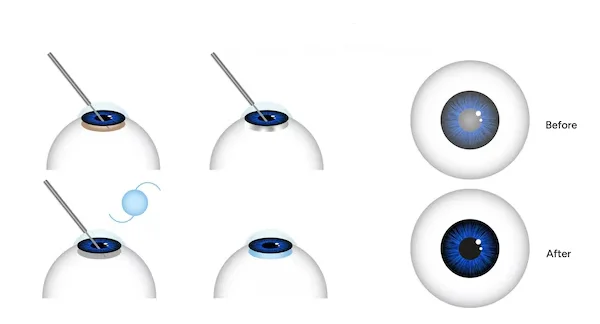
Cataract Surgery Procedure
The procedure generally takes 15–30 minutes and is usually performed as a day-care surgery.
Step 1: Preoperative Evaluation
- Detailed eye examination
- Eye measurements for lens selection
- Medical history review
Step 2: Anesthesia
- Eye drops or local anesthesia are used
- Patient remains awake but comfortable
Step 3: Cataract Removal
- A small incision is created
- Cataract is broken and removed
- Artificial lens is inserted
Step 4: Completion
- Incision is usually self-sealing
- Eye shield is applied
- Patient is discharged the same day
Benefits of Cataract Surgery
Cataract surgery offers significant improvements in vision and quality of life:
- Clearer vision
- Better color perception
- Reduced glare and halos
- Improved night vision
- Increased independence
- Better quality of life
- Enhanced safety during daily activities
Precautions Before Cataract Surgery
Patients may be advised to:
- Undergo complete eye evaluation
- Inform the doctor about medications
- Control diabetes and blood pressure
- Avoid certain medications if instructed
- Arrange transportation after surgery
- Follow fasting instructions if required
Recovery After Cataract Surgery
Recovery is generally quick and uncomplicated.
First 24 Hours
- Mild irritation or watering
- Slight blurring of vision
- Protective eye shield may be used
First Week
- Vision starts improving
- Use prescribed eye drops regularly
- Avoid rubbing the eye
2–4 Weeks
- Most normal activities can be resumed
- Healing progresses steadily
4–6 Weeks
- Complete healing occurs
- Final vision stabilizes
Post-Surgery Care Instructions
For the best recovery:
- Use prescribed eye drops regularly
- Avoid rubbing or touching the eye
- Wear protective eyewear outdoors
- Avoid swimming for several weeks
- Avoid heavy lifting and strenuous exercise initially
- Maintain good eye hygiene
- Attend follow-up appointments
Possible Complications of Cataract Surgery
Cataract surgery is highly successful, but like all surgeries, it carries some risks.
Common Temporary Side Effects
- Mild redness
- Dryness
- Sensitivity to light
- Temporary blurred vision
Rare Complications
- Infection (endophthalmitis)
- Retinal detachment
- Increased eye pressure
- Swelling of the retina
- Lens displacement
- Persistent inflammation
- Secondary cataract (posterior capsule opacification)
Most complications are treatable when detected early.
Success Rate of Cataract Surgery
Cataract surgery has a success rate of over 95% when performed by experienced eye surgeons. Most patients experience significant improvement in vision and daily functioning.
Who is a Good Candidate?
Cataract surgery is suitable for:
- Adults with visually significant cataracts
- Individuals whose daily activities are affected
- Patients with cataracts causing vision impairment
- People seeking improved visual quality
A comprehensive eye examination helps determine eligibility.
Why Choose Beatx Healthcare?
At Beatx Healthcare, cataract surgery is performed using modern technology and patient-centered care.
Our advantages include:
- Experienced eye surgeons
- Advanced phacoemulsification systems
- Premium intraocular lens options
- Comprehensive eye evaluation
- Personalized treatment plans
- Safe and sterile surgical facilities
- Dedicated post-operative care
FAQs
1. Is cataract surgery painful?
No. The procedure is performed under local anesthesia or numbing eye drops, making it virtually painless.
2. How long does cataract surgery take?
The surgery usually takes about 15–30 minutes.
3. Can I go home the same day?
Yes. Cataract surgery is typically a day-care procedure.
4. When will my vision improve?
Many patients notice better vision within a few days, with continued improvement over several weeks.
5. Will I still need glasses after cataract surgery?
It depends on the type of lens implanted. Some patients may still require glasses for certain activities.
6. What is a secondary cataract?
A secondary cataract is a clouding of the lens capsule that can occur months or years after surgery. It can be treated quickly with a laser procedure.
7. Is cataract surgery safe for elderly patients?
Yes. Cataract surgery is commonly performed in older adults and is considered very safe when proper medical evaluation is done.
8. Can both eyes be operated on at the same time?
Usually, each eye is treated separately with a gap of a few days or weeks, depending on the surgeon's recommendation.